Level Reaction Bias
Structural context around key price levels so you can
stop guessing and start executing a repeatable playbook.
Objective levels
Levels are generated from historical market structure and session
behavior — not from signals, indicators, or subjective interpretation.
Reaction prerequisites
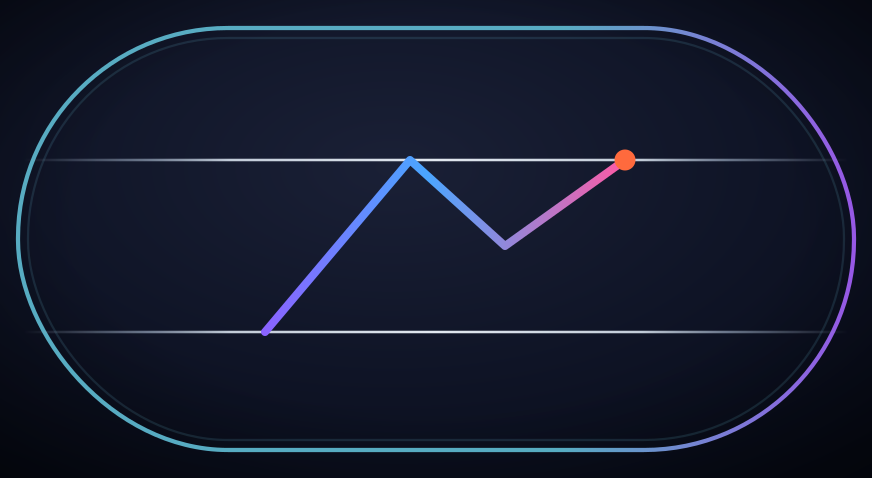
Before price breaks or falsely breaks a level, the chart leaves a behavioral footprint. ChartThread analyzes this behavior to build prerequisites that indicate the likelihood of a reaction.
Real-time market analysis
The system continuously reads every price movement in real time, analyzes it, and classifies it across predefined reaction prerequisites.
Routine automation
ChartThread takes over market monitoring and setup discovery, surfacing a focused shortlist of the most active setups where price is currently in a zone of interest.
Cross-exchange Spread Monitor
Structural insight into inter-exchange futures price discrepancies, helping you identify situations where price behavior across venues becomes inefficient.
Objective inter-exchange spreads
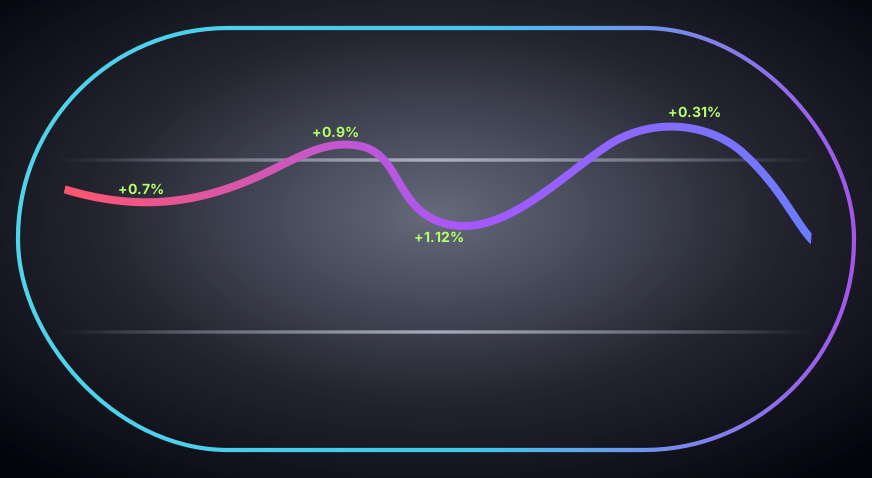
Spreads are calculated using real futures quotes across exchanges, with fees, funding, and execution conditions already accounted for — no manual calculations or assumptions required.
Real-time futures analysis
The system continuously reads futures price data across multiple exchanges and updates spread calculations in real time, without delays or manual refreshes.
Net price divergence
ChartThread surfaces the net spread, where core costs are already included. This allows you to quickly distinguish meaningful price discrepancies from normal market noise.
Monitoring automation
ChartThread handles continuous monitoring of cross-exchange futures spreads and presents a focused shortlist of instruments where price divergence becomes part of the current market context — not a random fluctuation.
Fair Value Gaps (FVG)
Structural price inefficiencies that highlight areas where the market moved too fast and left imbalance behind.
Objective price gaps
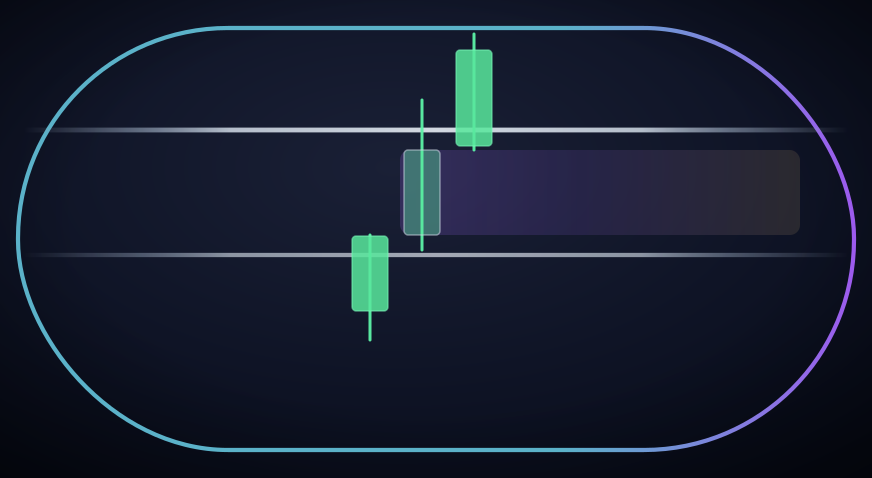
FVGs are identified from market structure and price delivery, marking zones where execution was imbalanced — without manual drawing or subjective interpretation.
Real-time detection
The system continuously detects and updates Fair Value Gaps as new price movements form, adapting to timeframe and current market conditions.
Reaction context, not a pattern
FVGs are not entry signals. They represent areas where liquidity was skipped, providing context for where price may slow down, react, or rebalance.
Meaningful zone filtering
ChartThread filters out minor and insignificant gaps, surfacing only FVGs with structural relevance that may influence future price behavior.
Key Price Levels
Structurally significant price levels where market activity repeatedly concentrates and decisions are made.
Objective level detection
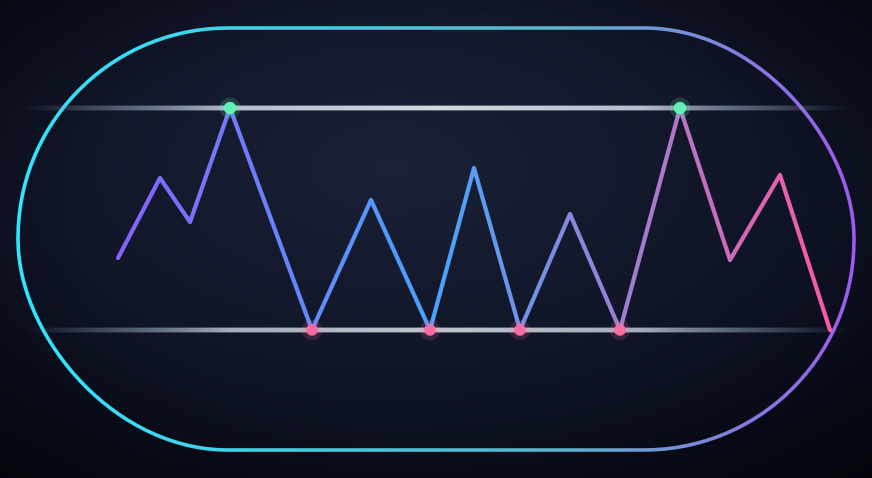
Key levels are detected from historical price structure, reactions, and session behavior — not manually drawn and not based on indicators or subjective bias.
Adaptive level updates
The system continuously updates key levels as market structure evolves, adjusting to new highs, lows, consolidations, and regime shifts across sessions.
Context, not prediction
Key levels do not predict direction. They define areas where price has previously reacted, providing a structural framework for planning scenarios and managing risk.
Relevance-based filtering
ChartThread filters out weak and insignificant levels, surfacing only structurally relevant price zones that have meaningful interaction history and contextual weight.