
The last article looked at the spread — the gap you pay on every trade. This one goes one level deeper, into the place that gap actually lives: the order book. The single price you see on a chart is only a summary. Underneath it is a stack of real orders, and that stack is where buyers and sellers decide the next tick.
Most beginners never open it. They watch candles and indicators and then feel surprised when price “suddenly” moves. But nothing moves until someone gives in — a buyer agrees to pay the ask, or a seller agrees to hit the bid. Once you’ve watched an order book fill and empty, price stops looking random.
Bids and asks
The book has two sides. Bids are buy orders resting below the current price — people who want in, but at a better price than now. Asks are sell orders resting above it — people willing to sell, but only if someone pays up. The best bid and the best ask are the two prices closest to the middle, and the gap between them is the spread from the last lesson.
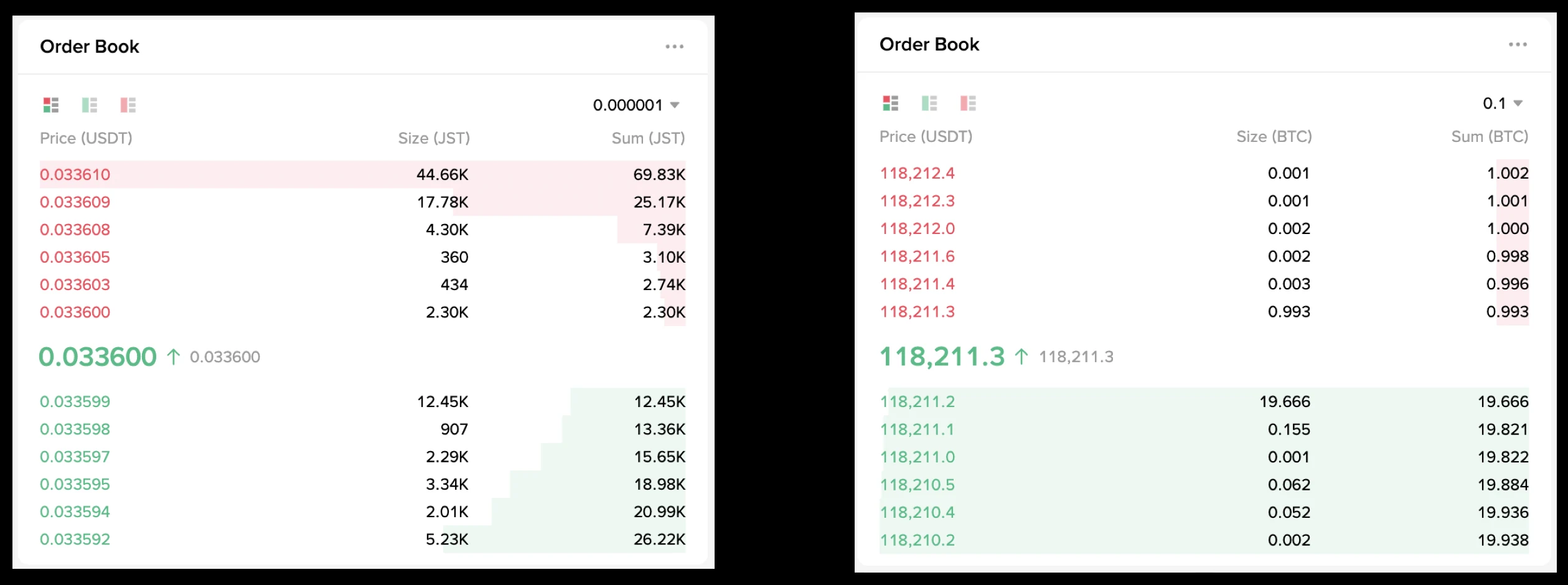
That spread isn’t arbitrary. When many participants are competing, orders stack tightly and the gap shrinks — the market feels tight. When participation thins out, the gap widens and the market feels thin. The two books above show it directly: BTCUSDT, deeply traded, has bids and asks pressed close together; a smaller pair sits looser.
Makers and takers
Here’s the distinction most retail traders never connect. When you place a limit order, you add an order to the book and wait — you’re supplying liquidity, which makes you a maker. Exchanges usually charge makers less, sometimes pay them a rebate, because your resting order is part of what makes the market tradable. When you place a market order, you cross the spread and take whatever the other side is offering right now — you’re consuming liquidity, which makes you a taker, and you pay more for that immediacy.
Both roles are necessary. Makers build the structure; takers are the ones who move price by lifting an ask or hitting a bid.
Why this matters for how you trade
Which role you play changes the math of your strategy. If you scalp, the spread and the maker-versus-taker fee decide whether a system is profitable or bleeds out a cent at a time. If you swing, reading where large orders pool in the book tells you where price is likely to stall, bounce, or fake out. If you trade leveraged futures, entering as a maker can cut your costs sharply — and at that leverage, costs are often what decide survival.
When I started, I thought the chart was the whole picture. It isn’t. Until you can see who is adding liquidity and who is taking it, you’re only reading the summary and guessing at the cause.
Next in this series: liquidity — why some markets are smooth rivers and others are deserts.
ChartThread reads that liquidity across Binance and Bybit so you don’t have to →