
Everyone wants to believe the market is chaos. It is easier that way — if price is random, then losing is bad luck, not a missed read. But a chart is not noise, and this one says so in two images.
Where the structure came from
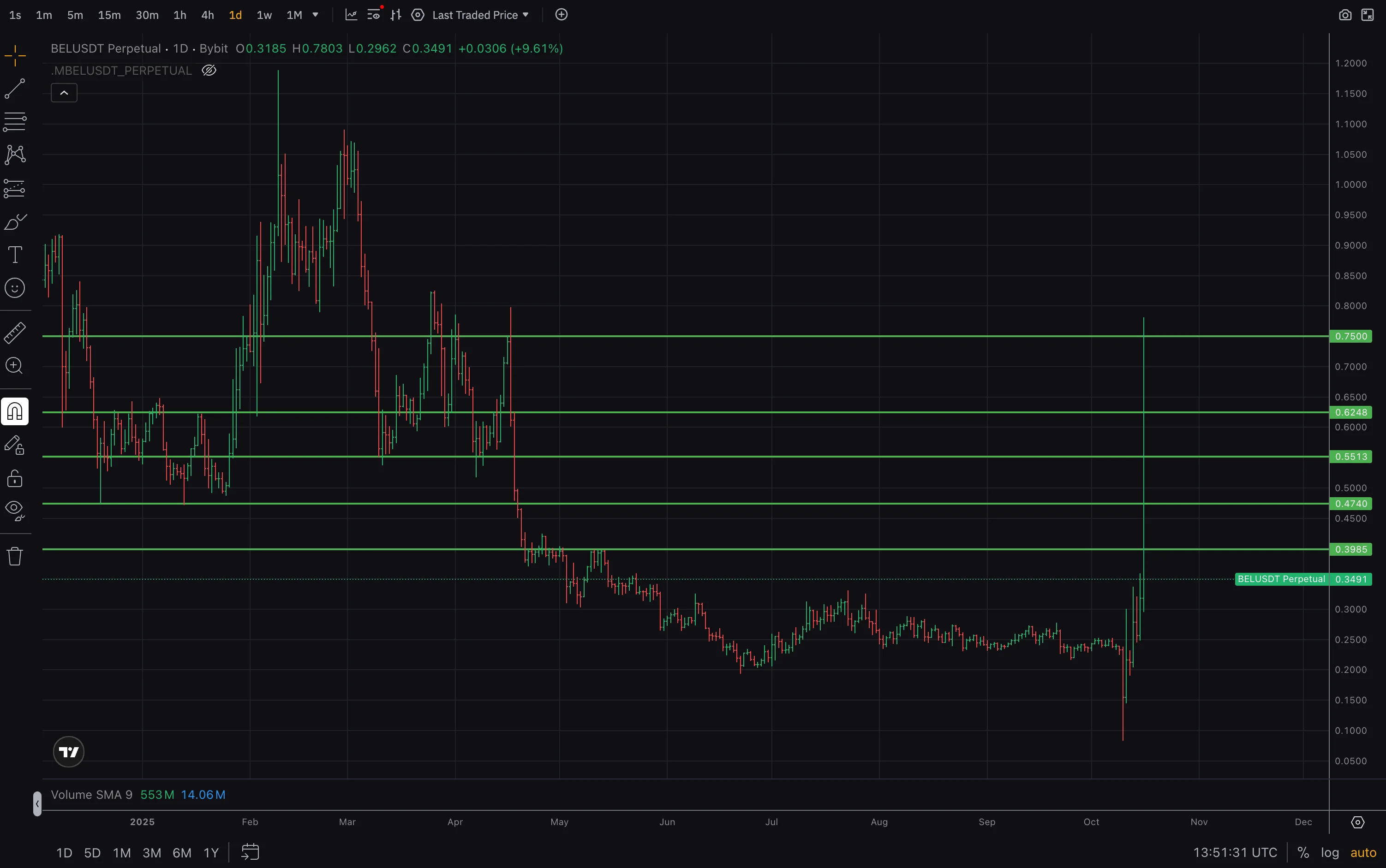
The levels on this daily chart were drawn long before the move that matters. Behind them are months of quiet: slow compression, a forgotten range, volatility that had drained out of the market. Nothing on the chart looked urgent. But the structure was already there, sitting silent.
Every green line marks a price where the market once met a large participant — where serious size was built or unwound. These are not predictions. They are the record of where real orders sat. When price comes back to one of them, that record is still there, and it acts again.
What happened when price returned
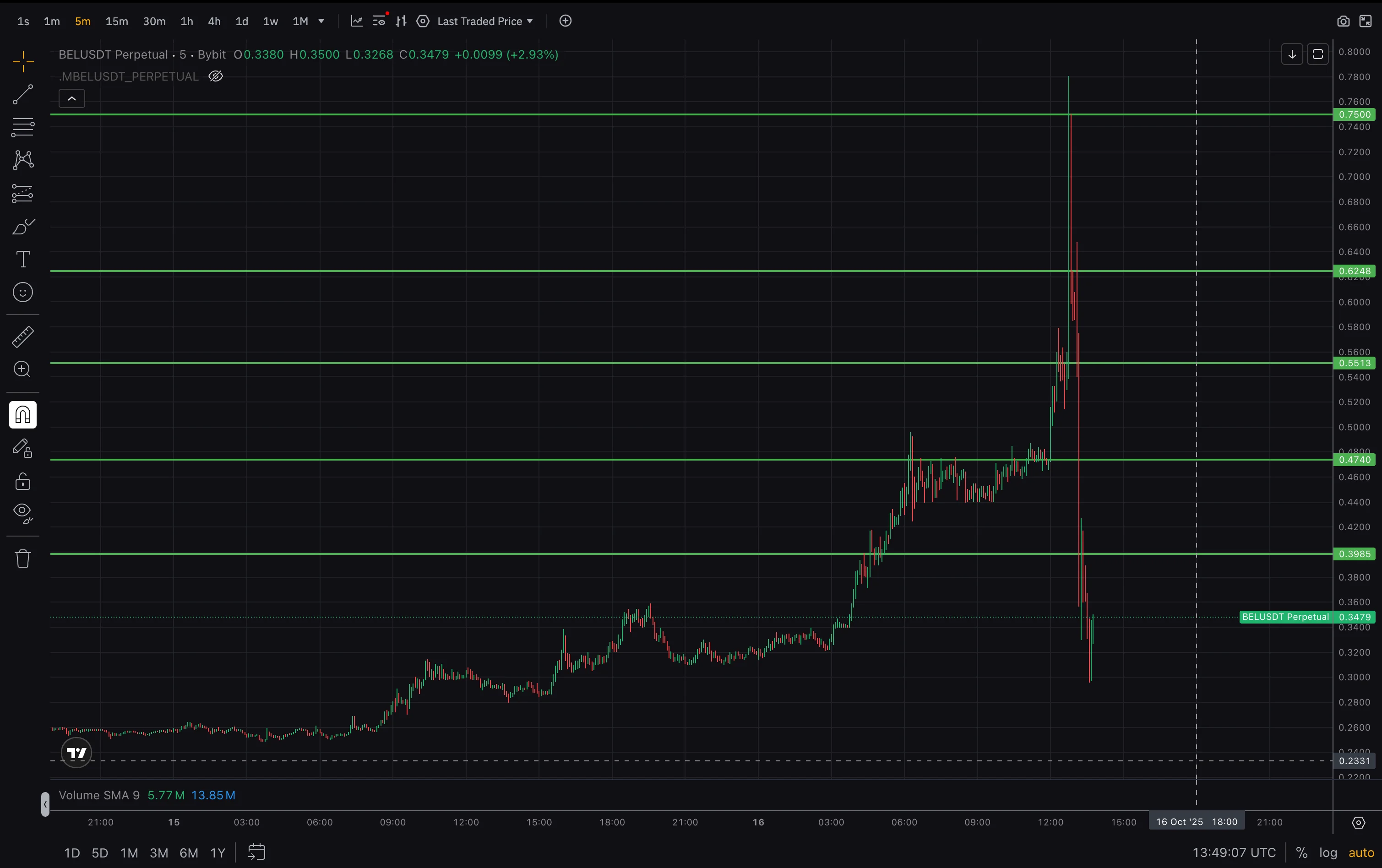
Now look at the 5-minute chart from the day price came back. One vertical move, and then a reaction at every level in turn. Pause, absorb, push, and eventually collapse. Each green line is a place where the move stopped to breathe.
That is not random volatility. It is stored energy releasing in steps, like a valve opening at each level on the way up. A large buyer cannot push forever — the deeper the market had accumulated, the harder the breakout, and the harder the breakout, the sharper the correction that restores balance afterward. The sell-off at the end is not panic. It is equilibrium coming back after a sprint.
The principle underneath
Every trend starts with accumulation and ends with distribution. The longer the accumulation, the more violent the eventual breakout — and no rally lasts forever, because the bigger the push, the deeper the pull-back that follows. This is structure, not emotion. It holds whether or not the people trading it are calm.
For a trader, that turns the chart into something you can prepare for rather than react to. Price consolidating under a level is one kind of situation; price failing to reclaim a level is another. Neither is a guess — both are responses to structure that was drawn before the move began. Follow that logic through this one clean sequence and there were several distinct reactions to read, not one.
The takeaway
Trading from levels is preparation, not prediction. Draw your levels before the move. Wait for price to show respect at one of them. When it does, you are reading structure instead of hoping — and that is the whole difference between a lucky trade and an understood one.
The market does not move randomly. It reacts, at prices that were visible in advance. The work is to have them marked before price gets there.
Charts: BELUSDT perpetual on Bybit, October 2025.