
Every trader has been burned by a breakout. The candle smashes through the level, the feed screams moonshot, and then price rolls over like a tired boxer. It happened to me enough times to force a rule: no breakout gets trusted without a checklist.
Yesterday’s article covered the physics — breakouts need stored energy. This one is the practical version: the five things I look for on the chart before I believe a break.
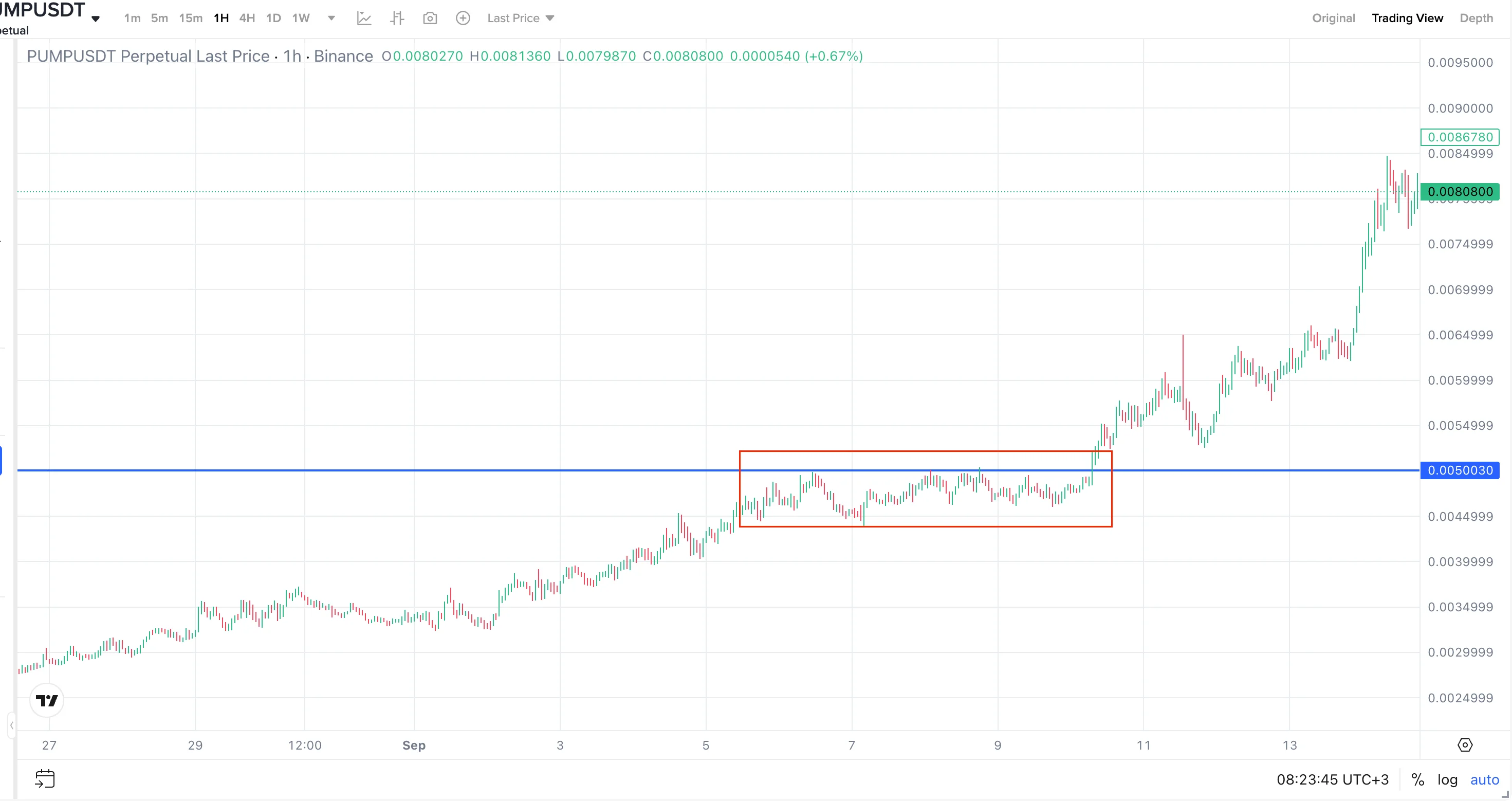
1. Accumulation at the level
Fuel first. If price drifted into the level casually, with no base built underneath, the move has nothing behind it. What you want to see is candles stacking near the level, volatility contracting, one side pressing while the other fails to push price away. No accumulation, no interest.
2. Shrinking bars on the approach
A market that approaches a level calmly is storing power. Bars that shrink as price leans on resistance are compression — energy waiting for release. The opposite picture, fat impulsive candles charging straight in, is the classic setup for a false break: the energy is being spent on the approach instead of at the wall.
3. Higher lows pressing in
The pressure cooker. Price keeps testing the ceiling, and every retreat is shallower than the last. A staircase of higher lows stacked under resistance means someone is absorbing everything offered and stepping their bids up behind it. That kind of pressure usually resolves violently — in the direction it was pressing.
4. A clean road ahead
Measure what’s on the other side of the level. If there is air above — no heavy zones for a long stretch — a break has room to actually travel. If the next wall sits just a step away, even a textbook breakout produces a cramped move that stalls immediately. This is also where zone quality matters: breaking into a band of old chop is breaking into quicksand.
5. A retest that holds
The strongest confirmation arrives after the break: price returns to the level within days, touches it, and holds without drama. The market is double-checking whether anyone still defends the old side. A quick, quiet retest that gives up no ground says the defenders are gone — the level has changed hands.
Why the list beats any single signal
Each item alone means little. Higher lows happen everywhere; retests fail; compression sometimes just fizzles. But the signals are not independent — they are all symptoms of the same underlying thing, real interest accumulating at a level — and when they appear together, they corroborate each other. Three or four of the five showing at once is a different market from any one alone.
Nothing makes a breakout certain. The checklist doesn’t predict; it filters. It keeps you out of the breaks that had nothing behind them, which — as later articles this week show — is most of them.
Watching levels for exactly these conditions, continuously and without fatigue, is the job ChartThread was built for.